Optimising your Human Risk Profile
Reduce risk through experiential, behavioural training interventions.
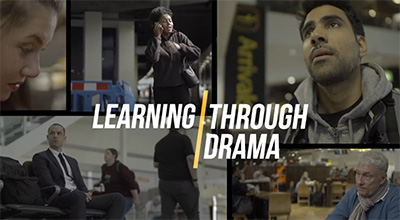
Our use of exciting, immersive dramas, representing your exact workplace setting, drives home understanding and insight into the impact of risky behaviours.
People change because they learn from experience - not just understanding the benefits of your recommended ways of working but feeling the benefit for themselves, their teams and the organisation.
3x Return On Investment
Methodology delivers a 3 x Return On Investment from human risk reduction:
- Behavioural Risk Reduction - impactful, durable behaviour change reducing human risk.
- Audit trail - demonstrating clear action taken to protect both organisation and employee from human risk.
- Culture Shift - organisation-wide alignment shifts responsibility for risk reduction - it’s not just the task of compliance or H&S, but a central part of everyone’s role.
Behavioural training delivers both tangible and intangible benefits:

Tangible gains include:
- Reduced human performance events - fewer error-induced delays and repeats.
- Improved human resilience and capacity.

Intangible gains include:
- Increased team cohesion and collaborative working benefit – wastage reduced
- Building of leadership capability and decision-making discipline.












We build the behaviours in your people that reduce risk and increase efficiency.
Our use of exciting, affecting dramas drives home understanding and insight into the impact of risky behaviours.
People change because they feel the benefit of recommended ways of working – for themselves, their teams and the organisation .
Our Services
Providing a practical ‘toolkit’ with which to ensure successful communication of feedback and information critical to risk reduction and efficiency.
Ensuring strategy is rolled out effectively through increasing skills like identifying and managing change fatigue, building emotional resilience and maintaining engagement and motivation.
Developing trust, openness and genuine cross-functional working practice through the creation of a growth mindset - in yourself and in others.
Building skills for dealing with multiple time critical demands, whilst maintaining efficiency and output in high stress settings.
Giving Leaders the capacity to harness the motivation power of establishing a common sense of purpose – and how to communicate it.
Conflict management involves learning key skills in de-escalation, negotiation and influencing, as well as how to identify stress behaviours – in others and in yourself.
Walking the Field is key to motivational and effective leadership. Feedback gathering, proactive questioning, listening skills are all vital to the efficient communication of purpose and motivating your teams.
Mindset changing sessions that build capacity in assessing and understanding risk parameters. Safety First as a baseline to driving efficiency alongside innovation, reducing risk from delegation and proactivity.
Optimise your communication of concepts, priorities, expectations and messaging. Building a personal communication strategy that is flexible enough to adapt to specific audiences, recorded or live virtual delivery and dealing with nerves and stress behaviours – yours and others’!
Building an organisation-wide sense of responsibility for protecting the organisation that includes healthy scepticism of any incoming request whilst re-discovering the vital element of trust through informed verification.
How to encourage innovative, independent critical thinking and proactivity amongst your workforce whilst managing the risks inherent in an unskilled use of delegation. Includes examination of attitudes to learning from mistakes.